CNC Machining Vietnam — Stainless Steel
303 · 304 · 316L · 17-4 PH
Stainless Steel CNC Machining
Shipped from Vietnam
Sourcing stainless steel CNC machining offshore means managing grade selection, passivation spec, and dimensional hold on a material that punishes poor tooling strategy. VNcontX machines 303, 304, 316, 316L, and 17-4 PH stainless to ±0.005mm standard tolerance, with in-house passivation to ASTM A967. ISO 9001:2015 certified. 100% FAI with Zeiss Contura CMM report. Lead time 7–12 days from drawing approval.
±0.005mm
Standard Tolerance
Ra 0.8μm
Standard Surface Finish
Cpk ≥ 1.67
Process Capability
100% FAI
CMM Report Every Order
304 vs 316 Stainless Steel — Grade Selection for Machined Parts
Grade choice drives cost and corrosion performance. The wrong call on a fluid-contact part costs more to rework than the grade premium. Below is how we route stainless jobs at VNcontX.
Grade
Composition Note
Best For
Machining Note
SS303
Free-machining grade — sulfur added
High-volume turned parts, fasteners, shafts — where corrosion spec is moderate
Best machinability in the SS family; tool life 30–40% longer than 304
SS304
18% Cr / 8% Ni — general austenitic
Structural brackets, enclosures, food-contact parts, general corrosion resistance
Work-hardens — requires correct cutting speed and chip management
SS316 / 316L
18% Cr / 10% Ni / 2% Mo — marine-grade
Marine hardware, chemical-contact parts, medical instruments, offshore environments
More abrasive than 304 — tool wear higher, requires tighter coolant management
17-4 PH
Precipitation-hardened — H900 / H1025 condition
Aerospace brackets, valve bodies, high-stress structural components
Machines in annealed condition; post-machine aging to final hardness
Grade availability on every order: SS303, 304, 316, 316L, 17-4 PH stocked at our HCMC facility. For general CNC machining jobs mixing stainless with aluminum or tool steel in the same order, we quote as a consolidated RFQ — one contact, one lead time.
Stainless Steel Machining Capabilities — What the Specs Mean for Your Parts
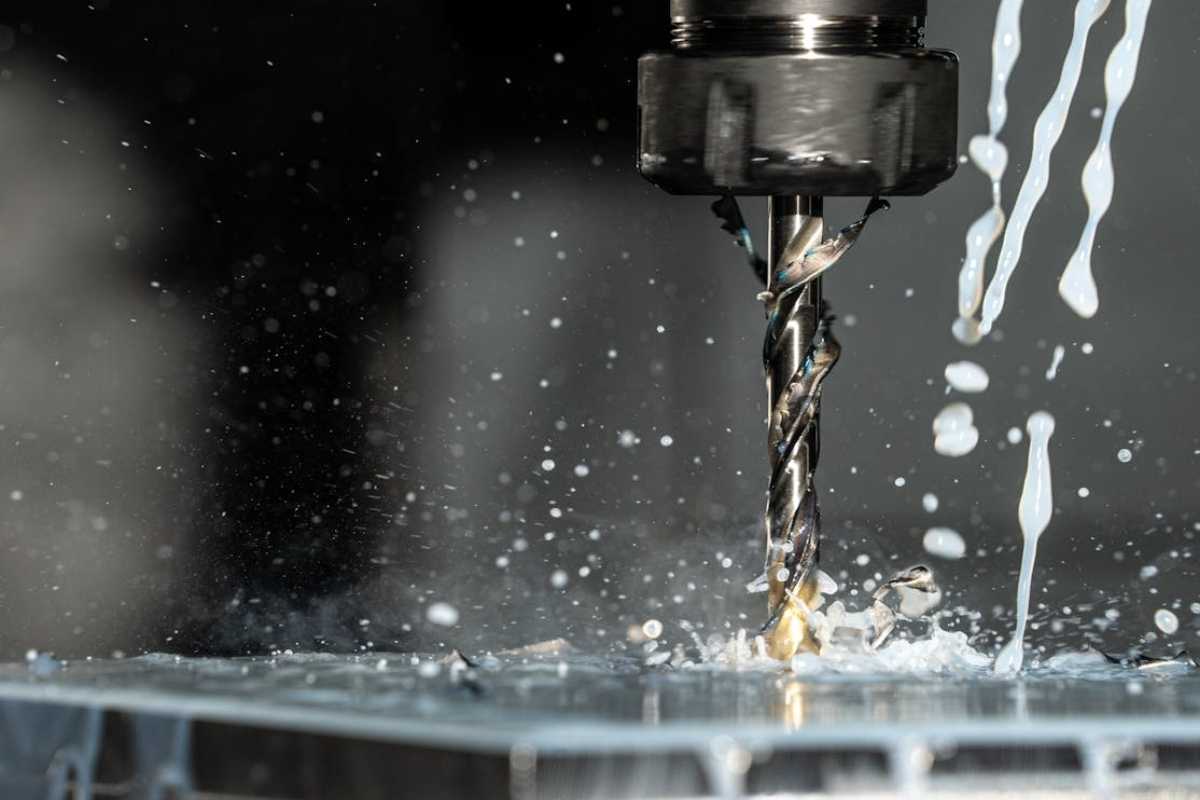
Stainless steel work-hardens during cutting. If feed rate and depth of cut aren’t managed correctly, the part surface becomes harder than the tool specification expects — leading to dimensional drift on subsequent passes. Our DMG Mori 5-axis machines run adaptive toolpaths with live spindle load monitoring on stainless jobs. That means the first part and the 200th part hold the same tolerance.
Process Specifications
- Tolerance: ±0.005mm standard | ±0.003mm precision
- Surface: Ra 0.8μm standard | Ra 0.4μm fine finish
- Equipment: DMG Mori 5-axis | Mazak QT turning
- Thread: M2 to M64 | 1/4-20 to 1-1/4″ UNC / UNF
- Bore tolerance: H7 / H6 class on request
Finishing Options — Stainless
- Passivation — ASTM A967 / AMS 2700 (Nitric or Citric)
- Electropolish — Ra 0.2μm, for fluid-contact or sanitary surfaces
- Bead blast — uniform matte, pre-passivation or standalone
- Mirror polish — Ra < 0.1μm, optical or decorative
- Black oxide — MIL-DTL-13924 Class 1
- Laser marking — part numbers, QR codes, serial IDs
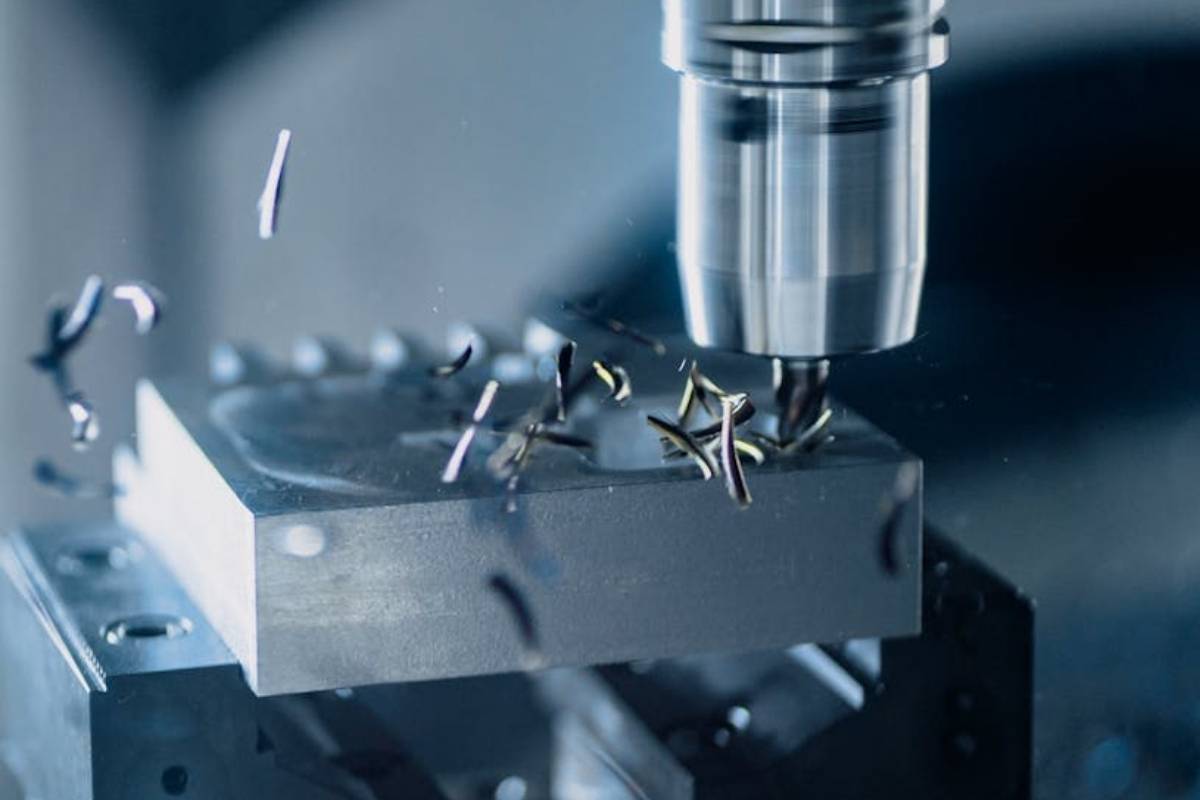
Deep-bore stainless jobs — cross-drilled port blocks, manifolds, valve bodies — route to our 5-axis CNC machining line. Single-setup means positional accuracy on intersecting bores doesn’t accumulate re-fixturing error. For high-volume stainless turned parts — fasteners, fittings, shaft stubs — our CNC milling and turning lines run stainless batches concurrently with parallel CMM sampling.
Why Source Stainless Steel CNC Machining from Vietnam vs China
Chinese stainless machining under Section 301 tariffs carries a 25–145% import duty on finished machined parts entering the US. Vietnam is at 0% — no Section 301 exposure, full EVFTA access for EU buyers. On a landed cost comparison, VNcontX stainless parts typically run 30–40% below equivalent Chinese suppliers after tariffs are applied.
For Australian buyers: Cat Lai Port in HCMC to major Australian ports runs 8–12 days sea freight. Air freight HCMC → Sydney or Melbourne: 2–3 days. Vietnam has effectively zero SEO competition for stainless machining in the Australian market — most Vietnamese manufacturers don’t export directly. VNcontX does, with full export documentation and CoC included on every shipment.
Compare to our aluminum CNC machining line for mixed-material assemblies. Both services run under the same ISO 9001:2015 system, same CMM reporting protocol, same lead time structure.
What Buyers Ask Before Placing a Stainless Machining Order in Vietnam
Can you hold tight bores in 316L?
Yes. Bore tolerances to H7 class (±0.010mm on a 20mm bore) are standard on stainless. H6 is available for bearing-fit applications. All bores are measured post-finish with Zeiss Contura CMM and reported in the FAI package — pass/fail against your drawing, not a generic check sheet.
Does passivation change the dimensions?
Passivation — nitric or citric per ASTM A967 — removes the free-iron layer and does not build up on the surface. There is no measurable dimensional change. Electropolish does remove material: typically 5–15μm per surface. For tight-tolerance electropolished parts we machine with the removal allowance built in, confirmed at DFM review.
What’s the minimum order quantity?
No minimum. We run single FAI samples through to production batches of 5,000+ pieces. Prototype pricing applies to 1–10 pieces; production pricing (with volume break) kicks in from 50 pieces. We quote both in the same RFQ response so you see the cost crossover point before committing.
Do you supply a material cert with the parts?
Yes — every stainless order ships with a mill certificate (heat number traceable), Certificate of Conformance, CMM FAI report, and passivation test record where applicable. PPAP Level 2 or 3 documentation is available on request; specify at RFQ stage.
Stainless Steel CNC Machining — FAQ
What is the difference between 304 and 316 stainless steel for CNC machined parts?
SS316 adds 2–3% molybdenum to the 304 composition. That molybdenum addition closes the pitting corrosion mechanism that chloride ions exploit in 304 — relevant for marine, chemical-process, or high-salinity environments. For dry structural applications or food-contact parts that see standard cleaning agents, 304 performs adequately and costs less per kg. The machining difference: 316 is slightly more abrasive than 304, which increases tooling cost. We adjust the quote accordingly — the grade delta is typically 8–12% on machining cost, before material price difference.
What lead time can I expect for stainless CNC machining from Vietnam?
FAI samples (1–5 pieces): 5–7 business days including passivation. Standard production: 7–12 days from drawing approval. Expedited runs: 5–7 days. These timelines include finishing when specified in the RFQ. Shipping from Cat Lai Port HCMC to US West Coast runs 18–22 days sea, 2–3 days air. We confirm feasibility and transit before you commit — no surprises after the order is placed.
Is SS317-4 PH available, and what condition do you machine it in?
We machine 17-4 PH (also written 630 stainless) in the annealed (Condition A) state, then age-harden to the specified H-condition — H900, H925, H1025, or H1150 — after machining. This is the correct sequence: machining a fully hardened 17-4 part risks tool damage and is not cost-effective. Final hardness and condition are verified by Rockwell C test and reported in the CoC. Specify the required condition on your drawing or RFQ.
Can you handle stainless parts with both machining and welding in the same order?
Yes. Stainless assemblies requiring TIG welding are handled within our Sheet Metal and Assembly line — same facility, same ISO 9001:2015 QMS. Weld procedure qualification records (WPS/PQR) are available on request for structural applications. Post-weld passivation runs on the completed assembly, not the individual machined components, to ensure the heat-affected zone is treated. Specify weld class and passivation requirement at RFQ.
How does your pricing compare to Chinese suppliers for stainless CNC machining?
On ex-works price, Chinese suppliers may quote 10–15% lower than VNcontX on simple stainless turned parts. On landed cost into the US, Section 301 tariffs (25–145% on Chinese machined parts under relevant HTS codes) flip that equation. A Chinese quote of $8.00/piece becomes $10–$19.60 landed. VNcontX ships to the US at 0% tariff. For EU buyers, EVFTA gives Vietnam preferential duty treatment. We’re not the cheapest ex-works option. We are consistently the lower landed cost for US and EU buyers.
Get a Stainless Steel CNC Quote from Vietnam
Upload your CAD file or drawing — our engineers review grade, tolerance, finish spec, and lead time within 24 hours. No automated instant quote. A real engineer reads your file.
Request a Technical Quote →
Talk to an Engineer →