
Wire EDM Machining in Vietnam
for Die Inserts & Hardened Tool Steel
Conventional CNC hits a wall at 58 HRC. Draft angles become a liability on complex die cavities. Wire EDM removes both constraints: it cuts hardened P20, H13, D2 and S136 at full hardness, holds ±0.003mm on intricate internal profiles, and leaves no burr — ready for assembly or direct press fit.
VNcontX operates wire EDM alongside 5-axis CNC and die-making under one ISO 9001:2015 certified facility in Bình Chánh District, Ho Chi Minh City. No subcontracting. Every part ships with a full CMM report (Zeiss Contura or Mitutoyo).
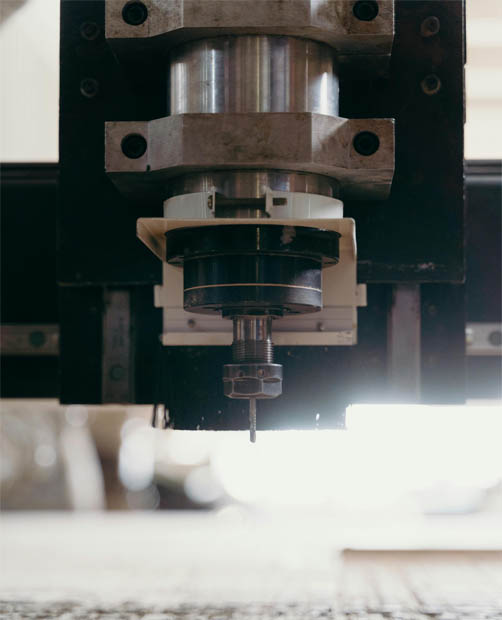
What Wire EDM Actually Does — and When to Specify It
Wire EDM (Electrical Discharge Machining) uses a continuously fed brass wire, typically 0.20–0.25mm diameter, as an electrode. A controlled spark erodes the workpiece through dielectric fluid. There is zero cutting force — the wire never contacts the part.
That force-free characteristic is what makes wire EDM the default process for:
Die & Mold Tooling
Progressive die punches and die plates, injection mold inserts, lifters, and slides. Hardening before EDM eliminates heat distortion risk post-machining.
Tight Internal Profiles
Slots, keyways, spline forms, and non-circular through-holes where endmill radius leaves unwanted material. Wire EDM produces true sharp internal corners (r ≈ 0.13mm).
Hardened & Exotic Alloys
D2 (62 HRC), H13 (52 HRC), S136, Inconel 718, titanium Grade 5 — materials that would destroy carbide tooling or deflect under cutting forces.
Precision Extrusion Dies
Complex profile dies for aluminum extrusion where surface finish Ra ≤ 0.4μm and dimensional accuracy below 0.005mm are mandatory.
Wire EDM Capabilities at VNcontX
| Parameter | Standard | Precision |
|---|---|---|
| Dimensional Tolerance | ±0.005mm | ±0.003mm |
| Surface Finish (Ra) | Ra 0.8μm | Ra 0.4μm |
| Max Workpiece Hardness | 62 HRC (D2 / H13 / S136) | |
| Min Internal Radius | r ≈ 0.13mm (0.25mm wire) | |
| Max Cut Height (Z-axis) | 250mm | |
| Taper Cutting | Up to ±30° (angular die relief) | |
| Cpk | ≥ 1.67 | |
| Inspection | 100% CMM (Zeiss Contura + Mitutoyo) + FAI report | |
| Lead Time | 7–10 days | 5–7 days (expedited) |
Wire EDM vs. CNC Machining vs. Sinker EDM — When to Use Each
The three processes overlap in capability but each has a clear primary domain. Specifying the wrong process costs time and money. Quick reference:
| Criteria | Wire EDM | 5-Axis CNC | Sinker EDM |
|---|---|---|---|
| Works on hardened steel (>55 HRC) | ✓ Yes | ✗ No (tool wear) | ✓ Yes |
| Internal sharp corners (r < 0.5mm) | ✓ r ≈ 0.13mm | ✗ Limited by tool radius | ✓ Electrode-dependent |
| Blind pockets / recesses | ✗ Through-cut only | ✓ Yes | ✓ Primary use case |
| Taper / relief angle cutting | ✓ Up to ±30° | ✓ 5-axis capable | Limited |
| Best tolerance | ±0.003mm | ±0.005mm | ±0.005mm |
| Cutting force on part | Zero | High (tool contact) | Zero |
| Speed (bulk material removal) | Slow | Fast | Slow |
| Typical application | Punch profiles, die plates, extrusion dies | Structural parts, housings, fixtures | Cavity ribs, texturing, blind slots |
Taper EDM Cutting — Angular Die Relief & Extrusion Profiles
Taper cutting is one of the most underutilized capabilities of wire EDM — and one of the most valuable for die and tooling work. The Fanuc wire EDM at VNcontX supports angular cutting up to ±30° from vertical, programmable in single-pass.
Progressive Die Relief
Die openings require a relief angle (typically 0.5°–3°) below the cutting land to allow punched slugs to drop clear without jamming. Wire EDM cuts the straight land and the angular relief in a single taper pass — no manual bench work required. Angular accuracy: ±0.01° on the taper face.
Aluminum Extrusion Dies
Extrusion die bearing length and back taper are critical for metal flow control. Wire EDM cuts the bearing profile to ±0.003mm with bearing taper angles programmed directly from the die drawing — consistent across the full die face without cumulative setup error from multiple CNC passes.
| Taper Parameter | Capability |
|---|---|
| Max taper angle | ±30° from vertical |
| Angular accuracy | ±0.01° |
| Bottom profile tolerance (taper cut) | ±0.005mm |
| Max cut height for taper | 200mm (angle-dependent) |
| Typical die relief angle range | 0.5° – 5° (stamping dies) |
| Machine | Fanuc Wire EDM (0.25mm brass wire) |
For extrusion die profiles with variable bearing length across a complex shape, send the DXF and bearing depth callout to duc.nguyen@vncontx.com — we will confirm taper feasibility and quote within 24 hours.
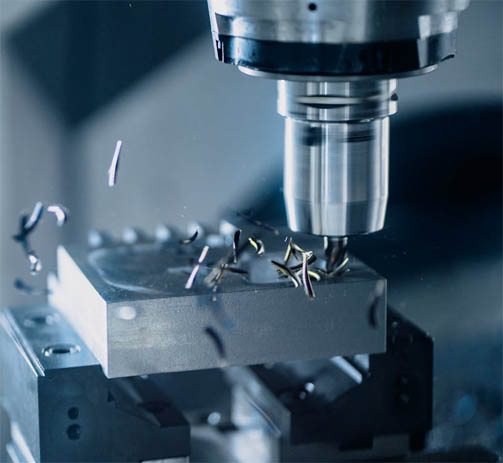
How Wire EDM Fits a Complete Tooling Workflow
Wire EDM is rarely a standalone operation. In a die or mold build, it handles specific features that CNC machining leaves unfinished. The typical sequence at VNcontX:
Need the full die build including CNC roughing, heat treatment coordination, EDM finish, and assembly? See our Tooling & Die Making service page for complete progressive die and mold insert capabilities.
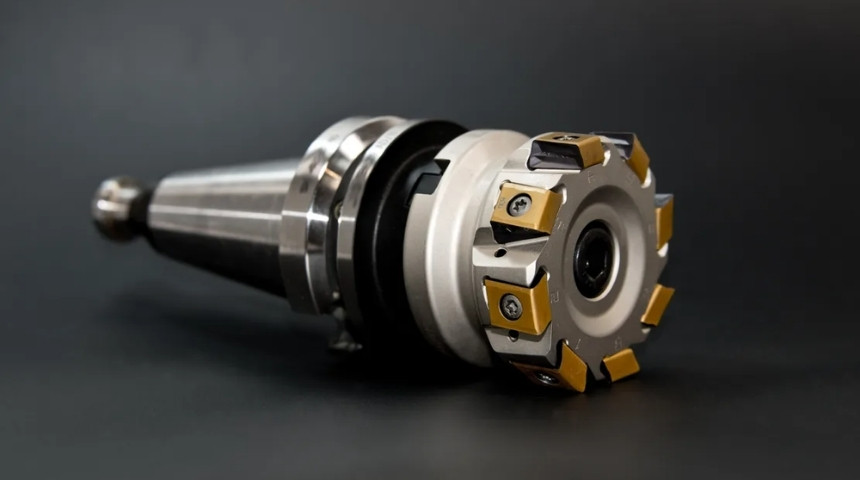
Equipment, Certification & Verified Outputs
Tolerance claims are only as good as the equipment and process behind them. Here is what VNcontX actually runs — not a capability brochure, but the specific machines, instruments, and documentation behind every EDM shipment.
Fanuc Wire EDM
0.25mm brass wire standard · 0.20mm available for tight-radius profiles · Fanuc CNC control with sub-micron interpolation · Auto wire threading for unattended overnight cutting runs.
Max workpiece: 600 × 400 × 250mm (XYZ) · Taper: ±30°
Zeiss Contura CMM + Mitutoyo
Zeiss Contura MPE: 0.9+2.5L/1000μm · Mitutoyo surface profilometer for Ra verification · Digital height gauge for batch sampling. Full GD&T report output (PDF + CSV) with every shipment.
ISO 9001:2015 certified · FAI on 100% of orders · Cpk ≥ 1.67 process target
| Part | Progressive die punch set — 32 pieces, compound profile |
| Material | D2 tool steel (SKD11), 60–62 HRC post heat treatment |
| Tolerance required | ±0.003mm on punch profile | Ra 0.8μm on cutting faces |
| Challenge | Internal radii r = 0.15mm — below endmill capability at this hardness |
| Process | 5-axis CNC rough (pre-HT) → heat treat D2 to 61 HRC → Fanuc wire EDM finish profile → Zeiss CMM 100% |
| Result | All 32 pieces within ±0.003mm. FAI report issued. Shipped air freight to US in 9 days total. |
Client details withheld per NDA. Numbers represent actual production run parameters. Request a sample CMM report at duc.nguyen@vncontx.com.
Wire EDM from Vietnam vs. China vs. Domestic — Landed Cost Reality
Precision tooling EDM is one of the categories where China’s Section 301 tariff exposure is significant. Under HTS 8480 (molds and tooling components), US importers currently face 25–145% additional duty on Chinese-origin tool steel inserts and die components.
| Factor | Vietnam (VNcontX) | China | US Domestic |
|---|---|---|---|
| Section 301 Tariff | 0% | 25–145% | N/A |
| EVFTA (EU tariff) | 0% (qualifying goods) | Standard MFN rate | N/A |
| Typical Part Cost Index | 1.0× | 0.8× pre-tariff → 1.0–1.5× landed | 2.5–4.0× |
| Air Freight to US West Coast | 2–3 days | 3–5 days | Domestic delivery |
| Tolerance Capability | ±0.003mm, Cpk ≥ 1.67 | Varies widely by tier | ±0.003mm (premium shops) |
Tariff rates per USTR Section 301 schedule, current as of H1 2026. Verify HTS classification with your customs broker for specific part categories.
What Engineers Ask Before Sending EDM Work Offshore
“How do I know your EDM tolerances are real, not brochure specs?”
Every shipment from VNcontX includes a full CMM report — measured dimension vs. nominal, with actual values, not pass/fail stamps. Zeiss Contura CMM has 0.9+2.5L/1000 MPE accuracy. You can import the report directly into your AS9100 or PPAP documentation package. Request a sample FAI report before ordering.
“Wire EDM is slow. What’s realistic for 10–20 die inserts?”
Wire EDM runtime scales with cut length and stock thickness, not part count. A batch of 20 identical D2 punches (25mm × 80mm profile, 80mm tall) typically runs 7–9 days including heat treatment coordination and CMM. Expedited queuing available for first-article samples in 5–6 days. DXF or STEP submission starts the clock on quoting within 24 hours.
“We have a progressive die project. Can you handle the full insert set, not just EDM?”
Yes. VNcontX handles the full tooling insert workflow: CNC roughing (5-axis DMG Mori), heat treatment coordination, wire EDM finish, sinker EDM for blind features, surface grinding, and CMM inspection — all under one roof. See Tooling & Die Making for scope and lead times.
“What file formats do you accept? We work in CATIA and SolidWorks.”
STEP, IGES, DXF, DWG, Parasolid (.x_t), CATIA V5 (.CATPart), SolidWorks (.SLDPRT). For wire EDM specifically, a 2D DXF of the cut profile plus a PDF print with tolerances and material callout is sufficient. Send files to duc.nguyen@vncontx.com for a 24-hour quote turnaround.
Frequently Asked Questions — Wire EDM
Related Services
Wire EDM is one element of a broader precision manufacturing capability at VNcontX. Depending on your program requirements:
Tooling & Die Making
Complete progressive die, transfer die, and injection mold insert manufacturing. Wire EDM, sinker EDM, 5-axis CNC, and surface grinding under one project.
CNC Machining Services
3-axis through 5-axis milling and turning for structural components, fixtures, and prototypes where conventional machining applies.
Send a DXF. Get a Quote in 24 Hours.
Wire EDM in hardened tool steel up to 62 HRC. ±0.003mm tolerance. CMM report on every shipment. ISO 9001:2015 certified.
Email: duc.nguyen@vncontx.com · Phone: (+84) 906 214 789 · Bình Chánh District, Ho Chi Minh City, Vietnam
