
CNC Machining Bronze, Copper, PEEK & Engineering Plastics Guide
Aluminum and stainless steel dominate most sourcing conversations — but a significant share of CNC orders involve materials that behave differently: bronze that galls without proper speeds, copper that work-hardens unpredictably, PEEK that requires dry machining, plastics that melt from friction. This guide covers material selection and machinability data for the grades we machine daily at our HCMC facility.
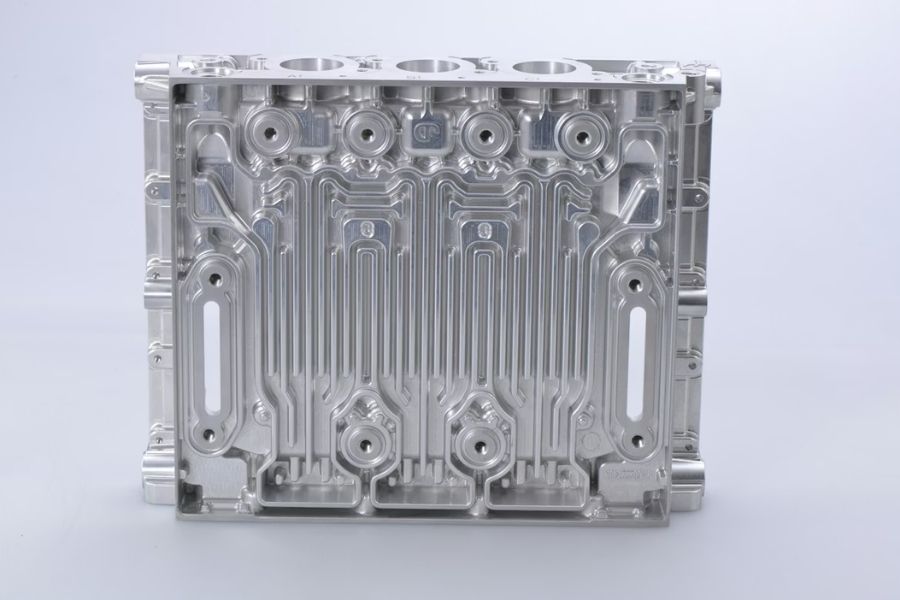
Material Overview: What We Machine
The table below lists every material grade currently available at our Bình Chánh facility. Tolerance and finish ratings reflect practical shop-floor performance on our DMG Mori 5-axis and Mazak QT turning centres — not theoretical maximums.
For aluminum grades (6061-T6, 7075-T6, 5052) and stainless steel (304, 316, 17-4 PH), see our dedicated pages: Aluminum CNC Machining Vietnam and Stainless Steel CNC Machining Vietnam. This guide focuses on the less-documented materials that generate the most DFM questions.
Bronze vs Brass vs Copper: Quick Comparison
The three copper-family metals are frequently confused at the RFQ stage. The table below covers the four properties that actually drive material selection — conductivity, machinability, cost, and corrosion resistance.
CNC Machining Bronze: C932, C954 & C863
Bronze is one of the most forgiving metals to machine — when you use the right grade. C932 (SAE 660 bearing bronze) is the default choice for bushings and sliding components: its lead content acts as a built-in lubricant during cutting, producing excellent chip breakage and allowing high feed rates without galling the tool.
Grade Selection
Tolerance & Surface Finish
Standard tolerance on bronze turning at our HCMC facility: ±0.005mm. Inner bore surfaces for bearing applications: Ra 0.8μm standard, Ra 0.4μm with fine finishing pass. Lead time for bronze bar stock: 7–12 days standard, 5–7 days expedited. C954 plate requires 1–2 additional days for material procurement from our Cat Lai bonded warehouse.
Copper CNC Machining: C110, C101 & C145
Pure copper presents a different challenge than bronze. High ductility means copper smears rather than chips — you get built-up edge on the tool, work hardening in the surface layer, and dimensional drift across a run if speeds and feeds aren’t controlled. Our Mazak QT turning centres run copper at cutting speeds 30–40% lower than brass, with positive-rake carbide inserts and high-pressure coolant to clear the gummy chips.
- Maximum electrical conductivity required (101% IACS for C101)
- EDM electrode billets — purity critical for electrode performance
- RF shielding and waveguide components
- Heat sink blocks where thermal conductivity >385 W/m·K
- Same conductivity as C110 but 4× better machinability
- High-volume turned parts: connectors, contacts, terminals
- Threaded components where C110 would tear on the thread flanks
- Any copper part with tight tolerance on internal features
Achievable tolerance on copper: ±0.005mm on outer diameters, ±0.008mm on internal bores for C110 (due to springback). C145 reaches ±0.005mm across both OD and ID. Surface finish Ra 0.8μm standard; Ra 0.4μm requires polishing pass — add 1 day to lead time.
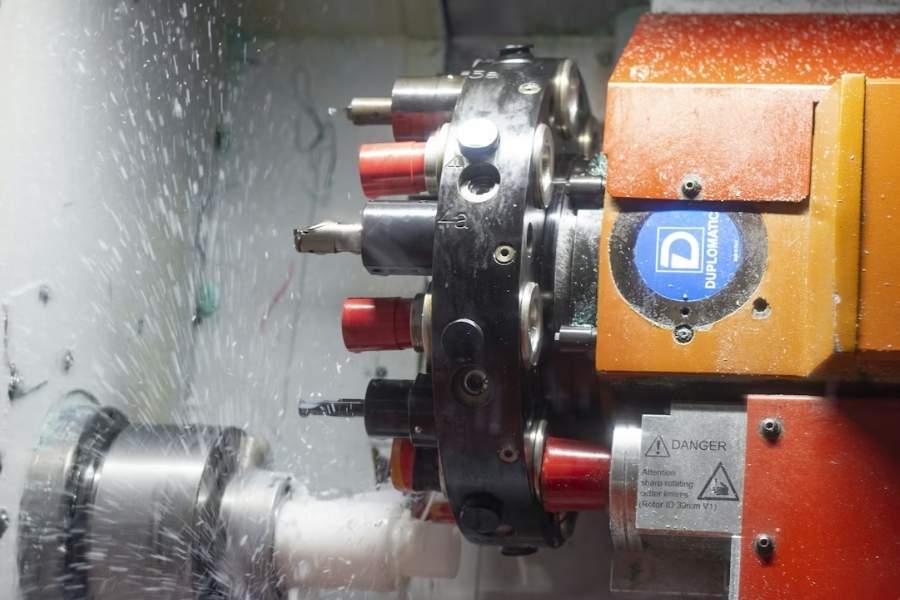
PEEK CNC Machining: Unfilled, GF30 & CF30
PEEK (Polyether ether ketone) is the material engineers reach for when metal won’t work: continuous service temperature to 250°C, chemical resistance to virtually all solvents, and a strength-to-weight ratio that competes with aluminium alloys at a fraction of the density. The trade-off is cost — PEEK rod stock runs 15–25× the price of 6061 — and machining behaviour that penalises any deviation from correct parameters.
PEEK Grades at VNcontX
Typical lead time for PEEK: 7–12 days standard. Material is ordered from certified medical/aerospace-grade suppliers. If your application requires material traceability documentation (MTR), specify this at the quote stage.
Engineering Plastics: POM, Nylon, PC & PTFE
Plastic machining failures are almost always a process problem, not a material problem. The most common issues we see on outsourced plastic parts arriving for rework: heat-induced dimensional shift from wrong spindle speeds, surface crazing from water-based coolant on hygroscopic materials, and chatter marks from inadequate fixturing of low-stiffness stock. Below is how we handle each material class.
POM (Delrin / Acetal) — Best General-Purpose Plastic
POM-C (copolymer) is the workhorse of precision plastic machining. It produces clean, discrete chips at high feed rates, holds tolerance well across the part, and doesn’t absorb moisture — critical for long-term dimensional stability in assembled mechanisms. POM-H (homopolymer, Delrin) has marginally better mechanical properties but slightly higher tool wear. For most applications, POM-C is the correct call.
Achievable tolerance: ±0.008mm on turned ODs, ±0.012mm on milled pockets. Use compressed air cooling, not liquid coolant, to avoid thermal shock. Lead time: 7–12 days (material typically held in stock).
Nylon (PA6 & PA66) — High-Wear Applications
Nylon’s moisture absorption is the dominant machining variable. PA6 absorbs up to 9% water by weight; a freshly machined nylon part left at 65% relative humidity for 48 hours can grow 0.3–0.5mm on a 100mm dimension. Our standard protocol for tight-tolerance nylon: machine 10–15% undersize, stabilise in controlled humidity for 24 hours, finish pass to final dimension. Parts are bagged immediately after inspection.
Tolerance for nylon at our facility: ±0.015mm for dimensions under 50mm; ±0.025mm over 100mm. If your design requires better, switch to POM — nylon is not the right material for sub-0.01mm work. GF30 nylon reduces moisture sensitivity significantly, with achievable tolerances approaching ±0.012mm.
Polycarbonate (PC) — Optical and Structural Covers
PC machines similarly to ABS but with lower residual stress if annealed before cutting. We pre-anneal all PC stock above 12mm thickness at 120°C for 2 hours before machining — this eliminates the subsurface stress that causes delayed cracking in high-precision parts. PC takes a genuine optical polish (Ra <0.1μm) without coating when machined correctly.
PTFE (Teflon) — Requires Rigid Fixturing
PTFE is the most dimensionally unstable material we machine. It cold-flows under clamping pressure, which means standard vice jaws produce oval parts. Our PTFE fixturing protocol uses custom soft jaws contoured to 0.2mm over nominal diameter, with clamping torque controlled by a digital torque wrench. Even with correct fixturing, we quote ±0.015mm as a floor tolerance for PTFE — parts requiring better need design review.
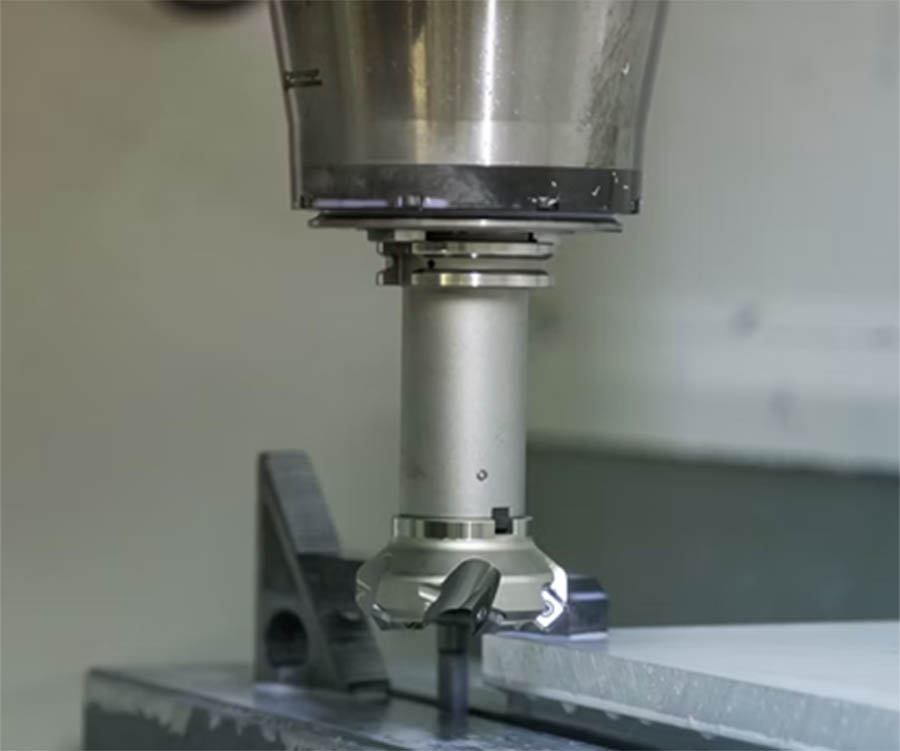
Material Selection: Decision Framework
The correct material for a CNC machined part is rarely the one with the best raw properties — it’s the one that delivers the required service performance at acceptable cost and lead time. Three questions guide the selection conversation with most buyers:
Not sure which grade to specify? Submit your drawing and application notes to Talk to an Engineer →. Our DFM team provides a written material recommendation within 24 hours, including cost delta between the top two options.
Inspection & Certification for Non-Metal Materials
Plastic and copper-alloy parts go through the same Zero-Defect Protocol as metals at our HCMC facility. Every order ships with:
For applications that require specific certifications (RoHS compliance for copper parts, USP Class VI for PEEK medical components), note this in your quote request. We source certified-grade material from pre-qualified suppliers and pass through the documentation.
All CNC machining services at VNcontX are covered by the same ±0.005mm standard tolerance and Cpk ≥ 1.67 process capability requirement. For plastic-specific capabilities, see our dedicated CNC Plastic Machining Vietnam page.
Frequently Asked Questions
By VNcontX Engineering Team · Bình Chánh District, Ho Chi Minh City · Updated May 2026
Ready to Quote Your Material?
Upload your CAD file and we’ll return DFM feedback + a material recommendation within 24 hours. No minimum order quantity. 7–12 day standard lead time from HCMC.
Request a Technical Quote → Talk to an Engineer →