
High Volume CNC Machining in Vietnam: Cost Per Part, Cpk Control & Batch Consistency at Scale
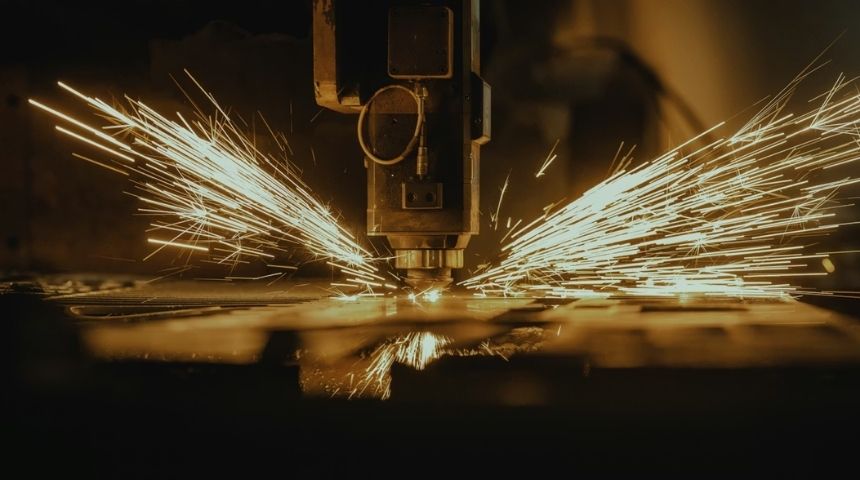
High volume CNC machining from Vietnam is a fundamentally different proposition than ordering 10 prototype parts — and most buyers only discover that difference at unit 3,000. Can your supplier hold ±0.005mm tolerance across 5,000 parts, not just five? Production machining demands documented process capability, fixture repeatability, in-process SPC, and a cost structure that doesn’t erode your margin as batch size grows. This post breaks down how CNC machining from Vietnam performs on the metrics that actually matter at scale.
Why “High Volume” Changes the Supplier Equation
At prototype quantities — 5 to 50 parts — almost any competent machine shop can hit spec. The operator makes small adjustments, inspects each piece, corrects on the fly. That approach collapses at 2,000+ parts per month.
High-volume production requires process capability built into the fixture, not the operator’s judgment. It requires SPC data showing your critical dimensions stay within control limits across tool-wear cycles. It requires a supplier who can run your part on the same machine, same setup, same toolpath — without re-qualifying from scratch every reorder.
The suppliers that handle both prototype and volume production well are those who treat the first article not as a one-time event, but as a process baseline. Every subsequent batch is measured against that baseline.
Cost-Per-Part Math: Vietnam vs China at Scale
Unit cost comparisons between Vietnam and China often focus on raw machining rate. That’s the wrong number. What matters to a US or Australian buyer is landed cost per part after tariff, freight, and rework.
| Cost Factor | China (2026) | Vietnam (VNcontX) |
|---|---|---|
| Section 301 Tariff (US) | 25–145% | 0% |
| EVFTA Tariff (EU) | Standard MFN rate | 0% (EVFTA) |
| Sea freight to US West Coast | 22–28 days | 18–22 days (Cat Lai Port) |
| Air freight to LAX | 3–5 days | 2–3 days |
| Machining rate vs China | Baseline | 30–40% lower landed cost |
| Cpk data included | Negotiable | Standard — every order |
| FAI report (CMM) | Extra cost | Included — 100% orders |
For a US manufacturer running 10,000 aluminum brackets per quarter — even at an identical ex-works price — the tariff differential alone represents significant per-unit savings. Add logistics proximity (HCMC to LAX: 2–3 days air, 18–22 days sea), and the total cost advantage is structural, not cyclical.
Example: An aluminum bracket at $4.20 ex-works from China carries a 25% tariff = $1.05/part landed penalty before freight. At 10,000 units/quarter, that’s $10,500 per quarter in tariff alone — not counting rework logistics. Vietnam: $0 tariff exposure. Same freight lanes, shorter transit time.

Process Capability: What Cpk ≥1.67 Means in Production
Cpk (Process Capability Index) measures how well a manufacturing process stays within tolerance limits — not on average, but at the extremes. A Cpk of 1.33 means you’re operating at 4-sigma. Cpk ≥1.67 means 5-sigma — fewer than 1 defective part per 100,000 produced under controlled conditions.
For high-volume CNC runs, we document Cpk for every critical dimension on the drawing. If a critical feature shows Cpk dropping toward 1.33 mid-batch — due to tool wear or thermal drift — the run stops for tool change or compensation. You see this in the CMM report, not as a returned shipment.
- Zeiss Contura CMM + Mitutoyo gauging on all critical dimensions
- SPC charts provided for features with bilateral tolerances ≤ ±0.01mm
- Tool wear compensation documented in job traveler — not at operator discretion
- Cpk / Ppk both reported: Cpk for short-term, Ppk for long-term process spread
- First Article Inspection (FAI) at batch start — every reorder, not just first order
- ISO 9001:2015 certified — documented non-conformance and corrective action
Machine Capacity for Production Runs
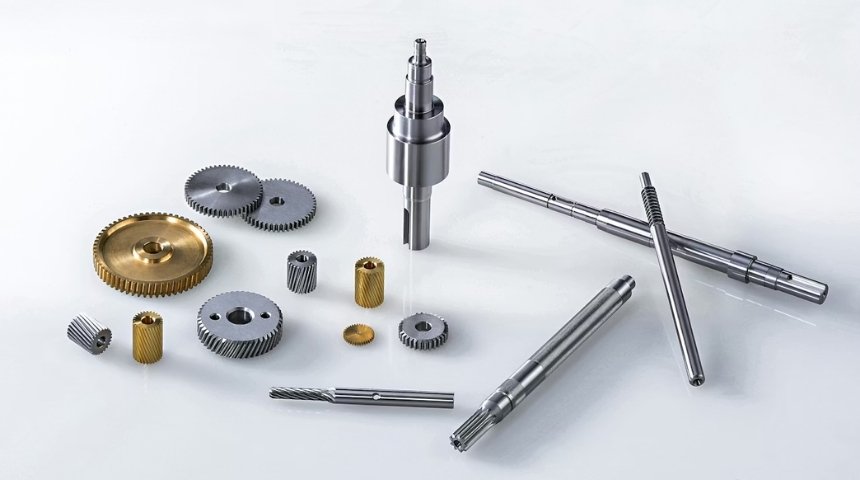
Equipment determines what’s possible at volume. Our production cell for high-volume CNC runs is built around:
Complex geometry in single setup — eliminates re-fixturing error that compounds across large batches. Consistent datum reference from part 1 to part 10,000.
High-spindle-speed turning for rotational components. Live tooling allows milling features in the same setup — critical for shaft and bushing production runs.
Custom fixtures machined and qualified for repeat orders. Fixture qualification records stored — zero setup variation between reorders.
Statistical sampling plan (AQL or customer-specified) during production. CMM data uploaded to inspection report — not just pass/fail stamps.
Materials Stocked for Production Continuity
Material availability is a common hidden constraint in high-volume CNC. A supplier that machines prototypes from off-the-shelf stock may not have production-grade certified bar stock available in consistent heat/lot numbers — which matters for aerospace, medical, and structural applications requiring material traceability.
For production runs, we maintain stock of:
- Aluminum: 6061-T6, 7075-T6 — certified mill certs, lot-traceable
- Stainless steel: 303, 304, 316L — heat number documentation on request. See our stainless steel CNC machining page for grade selection guidance
- Steel: 1018, 4140, 4340 — normalized and pre-hardened stock available
- Plastics: POM (Delrin), PEEK, PC, ABS — virgin resin, no regrind for production orders
- Titanium: Grade 5 (Ti-6Al-4V) for aerospace-spec production. Full CNC machining capabilities including 5-axis contouring
Lead Time Planning for Repeat Production Orders
First-order lead time and repeat-order lead time are different numbers. After fixture qualification and first article approval, reorder lead times compress significantly — because setup qualification is already done.
| Order Type | Quantity | Lead Time | Notes |
|---|---|---|---|
| First Production Run | 500–2,000 pcs | 7–12 days | Includes FAI + CMM report |
| Repeat Order (existing fixture) | 1,000–5,000 pcs | 5–8 days | Fixture on file — no re-qual |
| Expedited Production | Up to 2,000 pcs | 5–7 days | Dedicated machine allocation |
| Blanket Order (quarterly) | 5,000–50,000 pcs | Scheduled delivery | Material pre-purchased, fixed pricing |
Blanket purchase orders (BPOs) are available for buyers with predictable quarterly demand. We pre-purchase material, lock in pricing for 6–12 months, and deliver against a release schedule. This eliminates lead time volatility for your procurement planning.
Common Objections — Answered with Numbers
“We tried offshore production before and got dimensional drift by batch 3.”
Dimensional drift between batches is almost always a fixture or datum problem — not a machining capability problem. If a supplier is re-indicating the part on a different surface each reorder, you’ll see drift. Our production fixtures are machined and re-qualified with each fixture refurbishment. Datum reference on every part is identical to the first article. The Cpk data proves it across batches — we can provide cross-batch SPC overlays on request.
“Your MOQ is too low for us — we need a supplier who won’t deprioritize our 10K run for a 100K run.”
Capacity allocation is a real concern with large-volume suppliers. Our production model is purpose-built for mid-volume runs — 500 to 50,000 parts per order — where we can dedicate a machine cell to your job without competing against a single customer’s mega-run. Your 10,000-piece order is not a filler job here.
“How do I know tolerance holds at part 9,000 vs part 1?”
You receive an in-process CMM sampling report with batch timestamp data. If we run 10,000 parts over three days, the report shows dimensional data points sampled at start, mid-run, and end-of-run — not just a final inspection stamp. You can see the process mean and range over time.
FAQ — High Volume CNC Machining Vietnam
Industries & Part Types: Where High-Volume CNC Production Fits
High volume CNC machining applies across industries — but the process requirements differ. Below are the segments we run most frequently and the specific demands each places on a production supplier:
Aluminum 6061-T6 and steel 4140 brackets, motor housings, mounting flanges. Typical batch: 1,000–20,000 pcs/quarter. Key requirement: consistent hole position tolerances (±0.01mm) across all units.
Thin-wall aluminum enclosures and heat sink machining. Flatness ≤0.05mm across 200mm face. Surface finish Ra 0.8μm standard — critical for thermal interface and sealing.
Aluminum 7075-T6 and titanium Grade 5 components. AS9102 FAI required. PPAP Level 3 on request. Cpk ≥1.67 on all safety-critical features — documented per batch, not per order.
316L stainless and PEEK components. Lot traceability with material cert on every shipment. Electropolish and passivation (ASTM A967) available. See our stainless steel machining page for grade data.

CNC production vs injection molding — which threshold? For simple geometries, CNC production machining typically wins on tooling cost and lead time below 5,000–10,000 units. Above that, mold tooling amortization starts to drive unit cost down significantly. Both capabilities are available at VNcontX — same factory, same quality system.
Related Capabilities
High-volume production often involves more than one process. If your parts require post-machining finishing or if you’re transitioning from prototyping to production, these pages cover the related scope:
- CNC Machining for US Companies — online quoting, Section 301 tariff analysis, US-specific logistics
- Aluminum CNC Machining Vietnam — 6061-T6, 7075-T6 production runs, anodizing integration
- 5-Axis CNC Machining Vietnam — complex geometry in single setup, reduced fixturing error at volume
- CNC Turning Vietnam — rotational components, swiss turning, mill-turn capability
- CNC Machining Services Vietnam — full capability overview, materials, certifications
Ready to Move Production Volume to Vietnam?
Send us your drawing, target quantity, and required tolerance. We’ll return a technical quote with Cpk commitment and landed cost breakdown within 24 hours.
Direct: duc.nguyen@vncontx.com | (+84) 906 214 789
