Incoterms for Vietnam Manufacturing — FOB vs EXW vs DAP Explained for Importers
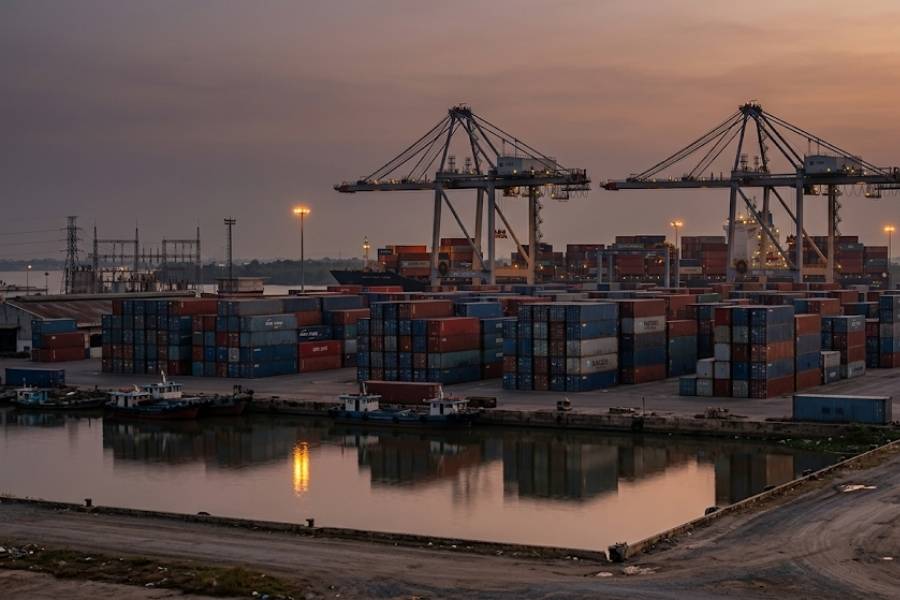
Choosing the wrong Incoterm on a Vietnam purchase order doesn’t just affect your freight cost — it determines who bears customs risk, who arranges inland haulage to Cat Lai Port, and who pays when cargo is damaged in transit. This guide explains how each term applies to Vietnam-origin shipments and which Incoterm fits which buyer situation.
Most international buyers default to FOB because it’s familiar. That’s often the right call with a Vietnam contract manufacturer. But it isn’t always — and the difference on a $50,000 order can mean thousands of dollars in unexpected costs, or a disputed liability when something goes wrong. What follows is a practical breakdown of the five Incoterms 2020 terms most commonly used in Vietnam manufacturing, with specific reference to Cat Lai Port and Tan Son Nhat Airport.
Why Incoterm Choice Matters More with Overseas Suppliers
With a domestic supplier, an unclear handoff gets resolved with a phone call. With a Vietnam supplier, the same ambiguity creates a time-zone gap, a language gap, and a jurisdiction gap. Incoterms eliminate the ambiguity by specifying, at each stage of the shipment, exactly who arranges transport, who pays, and who holds risk.
The three things Incoterms define — and which buyers most often confuse — are: (1) the point where risk transfers from seller to buyer, (2) who is responsible for arranging each leg of freight, and (3) who pays each freight cost. These three do not always change hands at the same moment. Under CIF, for example, the seller pays ocean freight and insurance, but risk transfers when goods are loaded at the origin port — before the ship departs. If the vessel loses containers in the Pacific, the goods are at the buyer’s risk even though the seller paid the freight.
Incoterms govern transport logistics and risk only — they do not govern payment terms, title transfer, or liability for defective goods. Those are governed by your purchase order and commercial agreement.
Incoterms 2020 is the current edition, published by the International Chamber of Commerce. Always specify “Incoterms 2020” in your purchase order. The previous edition (Incoterms 2010) is still in use by many suppliers, and the editions differ on FCA and on-board bill of lading provisions — details that matter for letter of credit transactions.
EXW Vietnam — Maximum Buyer Control, Maximum Buyer Risk
Risk transfers at the factory gate. The buyer arranges and pays for everything from that point: inland haulage to Cat Lai, Vietnam export customs clearance, international freight, and import clearance at destination.
EXW gives buyers maximum control over freight routing and cost. If you have a consolidation forwarder in HCMC who aggregates shipments from multiple Vietnam suppliers, EXW combined with LCL consolidation from a bonded warehouse near Cat Lai can meaningfully reduce per-unit freight cost on regular orders.
The practical problem: under EXW the buyer must handle Vietnam export customs clearance, which requires either a licensed customs broker in Vietnam or a freight forwarder with local in-country presence. Most US and Australian SME buyers have neither. A mishandled export customs entry can delay shipment by days or trigger a port examination that holds goods at the warehouse at the buyer’s cost.
EXW is poorly suited for first orders and for buyers without an established local agent network in HCMC. It becomes viable once you have a reliable Vietnam-based forwarder with a track record on your specific lanes.
FOB Vietnam — The Standard Incoterm for Importers
Risk transfers when goods are loaded onto the vessel at Cat Lai Port. The seller handles inland haulage and Vietnam export customs. The buyer arranges and pays ocean freight and insurance from that point forward.
FOB is the default Incoterm in Vietnam manufacturing. The seller handles the most complex local logistics step — getting goods through Vietnam export customs — and hands over responsibility at the ship’s rail. From there, the buyer’s freight forwarder takes over on familiar territory.
Sea Freight Transit Times: Cat Lai to USA and Australia
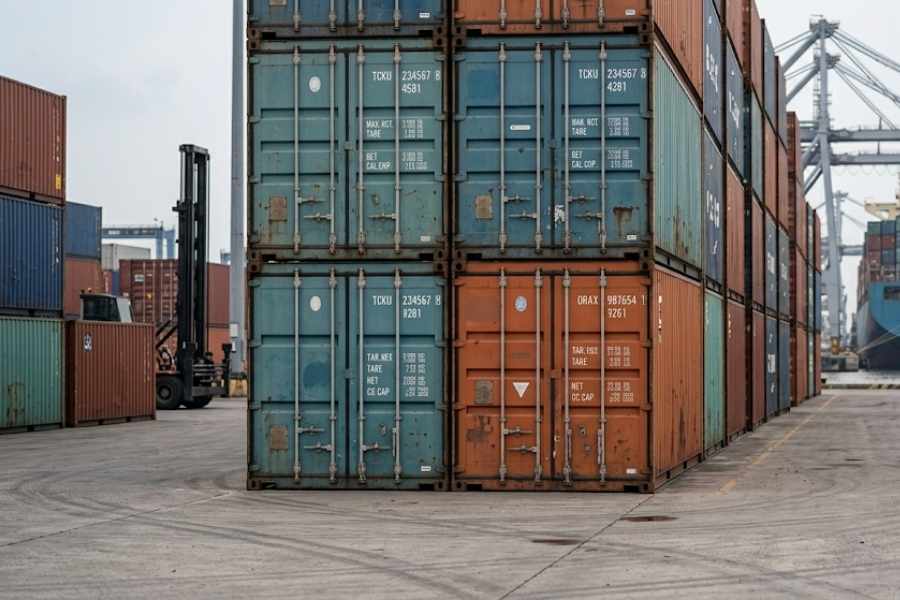
Sea freight from Cat Lai Port to West Coast USA runs 18–22 days. To Sydney or Melbourne: 10–14 days. Cat Lai is 20 km from the Bình Chánh industrial zone and one of Southeast Asia’s highest-throughput container terminals, with direct vessel services to Los Angeles, Long Beach, Sydney, and major European ports. Air freight from Tan Son Nhat Airport (25 km) to LAX or SFO: 2–3 days — used for samples, prototype approvals, and production shortfall recovery.
FOB vs FCA: Which Applies to Air Cargo?
FOB strictly applies to sea freight and inland waterway. For air shipments under Incoterms 2020, the correct term is FCA (Free Carrier), with the named place being the airline’s cargo terminal at Tan Son Nhat. Many Vietnam suppliers use “FOB” loosely for air shipments as well — always clarify the actual risk transfer point in writing for any air cargo order.
FOB Cat Lai is the recommended default for first-time buyers sourcing from Vietnam. It puts Vietnam-side logistics on the seller while keeping international freight routing and carrier selection in your hands.
CIF / CFR — When Your Supplier Quotes “All-In to Destination Port”
Seller pays ocean freight and minimum insurance to the destination port. Risk transfers when goods are loaded at Cat Lai — before the ship departs. The buyer bears risk for the entire ocean voyage even though the seller paid for the freight.
CIF is the term buyers most often accept without fully understanding. The appeal is obvious — one price that covers everything to your port. The problem is the risk/cost mismatch: the seller pays for the freight but the buyer bears the risk from the moment goods leave Cat Lai. If the vessel encounters a casualty en route to Los Angeles, the loss is yours even though you didn’t book the freight.
Why CIF Inflates Your US Import Duty Calculation
US CBP calculates import duties on the transaction value of goods. Under a CIF invoice, that transaction value includes the ocean freight and insurance cost — inflating your dutiable base compared to an equivalent FOB price. Australian Border Force applies the same principle; customs value is assessed on the FOB equivalent price. Buyers who receive CIF quotes and use them directly for duty modelling will consistently over-estimate their landed duty cost.
The ICC-C insurance the seller provides under CIF is minimum cover — it excludes most real-world cargo loss scenarios including theft, contamination, and many weather events. If a supplier insists on CIF terms, buy supplemental all-risk cargo insurance through your own broker regardless of what the seller has arranged.
CFR (Cost and Freight) omits even the insurance obligation. Both CIF and CFR are primarily useful for initial budget quotes from suppliers. Convert to FOB for any actual purchase order where you want clear risk allocation.
DAP — Door Delivery for Established Buyer Relationships
Seller delivers to your named warehouse. Risk transfers at the named destination. The seller bears all freight risk through the entire journey. Buyer pays import duties and customs clearance on arrival.
DDP (Delivered Duty Paid) is DAP plus the seller pays import duties — meaning the seller must act as importer of record in the buyer’s country. This is operationally and legally complex for Vietnamese manufacturers and rarely offered for US or Australian destinations. DAP is the realistic door-delivery option.
For repeat buyers placing regular orders on a predictable schedule, DAP simplifies accounts payable: one invoice per shipment covers all logistics to your door. It also places freight risk squarely on the seller for the entire journey, which creates a direct incentive for the seller to choose reliable carriers and ensure adequate packing.
The trade-off: DAP prices embed the seller’s logistics margin and carrier relationships. Buyers with established freight forwarder relationships and enough volume to negotiate competitive ocean rates will typically achieve a lower total cost under FOB. DAP makes the most sense when invoice simplicity matters more than per-shipment freight cost optimisation.
Which Incoterm 2020 Term Fits Your Vietnam Manufacturing Order
| Your situation | Recommended term | Reason |
|---|---|---|
| First order, no HCMC forwarder established | FOB Cat Lai | Seller manages Vietnam export customs complexity. Your forwarder quotes the international leg on familiar terms. |
| Consolidation forwarder already operating in HCMC | EXW or FCA | Your forwarder controls full routing and carrier selection. LCL consolidation across Vietnam suppliers reduces per-unit cost. |
| Repeat buyer, prefer single-line invoicing | DAP named warehouse | One delivered price per shipment. Seller carries freight risk to your door. Import duties remain with buyer. |
| Getting an indicative landed cost estimate only | CIF (indicative only) | Gives all-in delivered-to-port figure for budget modelling. Convert to FOB before issuing the actual PO. |
| Air freight — samples, urgent production, prototype approval | FCA Tan Son Nhat Airport | Correct Incoterms 2020 term for air cargo. Risk transfers when seller delivers to airline freight handler at TSN. |
| Supplier insists on CIF and won’t negotiate | Accept CIF + buy own insurance | Push back to FOB first. If CIF is unavoidable, purchase all-risk cargo cover independently — ICC-C minimum cover is inadequate. |
Export Documents Every Vietnam Manufacturer Shipment Requires

Regardless of which Incoterm is agreed, a compliant Vietnam export shipment requires a standard document set that your customs broker uses to file the import entry at the destination port. Knowing what to request from your supplier — and when — removes the most common causes of customs clearance delay. For a complete per-document breakdown, see our vietnam customs documents guide for US importers.
For US buyers, the core documents are: commercial invoice (stating HTS code, country of origin “Vietnam”, and FOB value), packing list, bill of lading or airway bill, and an Importer Security Filing (ISF) submitted at least 24 hours before vessel departure. The commercial invoice must clearly state “Country of Origin: Vietnam” to support your tariff classification and confirm you are outside the scope of China Section 301 measures. For a full breakdown of HTS codes and current tariff rates on precision parts, see our guide to Section 301 tariffs on machined parts.
For Australian buyers, a Form D certificate of origin is required to access AANZFTA preferential duty rates. Your supplier applies for Form D through their local authorised body before shipment. For rules of origin criteria and how to claim the preference at the Australian Border Force, see our AANZFTA guide for Australian importers.
For EU buyers, a Form E certificate of origin applies under EVFTA. For higher-value shipments, an REX (Registered Exporter) self-certification statement may substitute. Confirm the applicable mechanism with your EU customs broker before the first shipment.
Request all shipping documents electronically at least 3 working days before vessel cut-off. Pre-lodging your import entry before the ship departs avoids holds and demurrage charges at the destination port.
Incoterm Responsibility Matrix — EXW vs FOB vs CIF vs DAP
Who arranges and pays each logistics step under the four terms most commonly used in Vietnam manufacturing. “Seller” = your Vietnam manufacturer. “Buyer” = your company.
| Logistics step | EXW | FOB | CIF | DAP |
|---|---|---|---|---|
| Factory to port (inland haulage) | Buyer | Seller | Seller | Seller |
| Vietnam export customs clearance | Buyer | Seller | Seller | Seller |
| Loading onto vessel / aircraft | Buyer | Seller | Seller | Seller |
| Ocean or air freight | Buyer | Buyer | Seller | Seller |
| Marine / cargo insurance | Buyer | Buyer | Seller (min. ICC-C) | Seller |
| Risk transfer point | Factory gate | Loaded at Cat Lai | Loaded at Cat Lai | Named destination |
| Destination port to warehouse | Buyer | Buyer | Buyer | Seller |
| Import customs clearance | Buyer | Buyer | Buyer | Buyer |
| Import duties & taxes | Buyer | Buyer | Buyer | Buyer |
DDP excluded — seller pays import duties and acts as importer of record at destination. Rarely offered by Vietnam manufacturers for US or AU shipments due to legal and operational complexity.
Frequently Asked Questions
Sourcing Precision Parts from Vietnam?
VNcontX ships FOB Cat Lai as standard. Every order includes commercial invoice, packing list, certificate of origin, and CMM inspection report — sent electronically before vessel cut-off so your customs broker can pre-lodge. ISO 9001:2015 certified. ±0.005mm tolerance. 98.4% OTD.
Request a Technical Quote → Talk to an Engineer →duc.nguyen@vncontx.com ·
