Injection Molding Cost in Vietnam: A Complete Breakdown for Australian Sourcing Teams
By VNcontX Engineering Team · Published June 2026 · Based on tooling programs from our Bình Chánh, Ho Chi Minh City facility · ISO 9001:2015 certified
Injection molding cost is not a single number. It is the sum of tooling, per-part price, freight, import duty, and quality overhead — and every one of those variables changes depending on where you manufacture. For Australian procurement teams evaluating Vietnam as a sourcing destination, this guide gives you the actual cost structure: tooling ranges by complexity, per-part economics at different volumes, duty rates under AANZFTA, and the full landed cost gap versus China.
No promotional language. Numbers only.
How Injection Molding Cost Is Actually Structured
Most buyers ask the wrong first question. “How much does injection molding cost?” is not answerable without context — but “what does my total landed cost per part look like at 10,000 units per year?” is. Injection molding cost breaks into four components:
01 — Tooling Cost (One-Time)
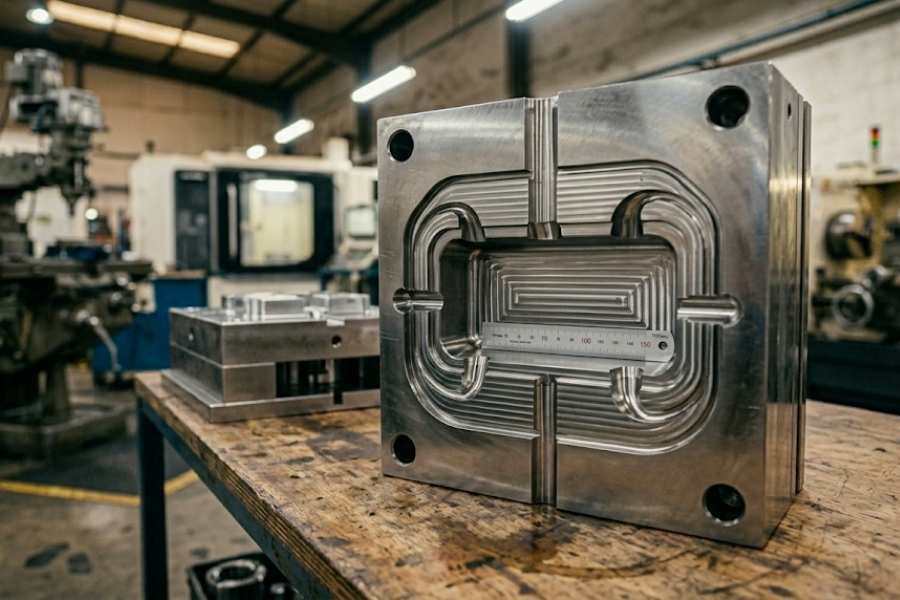
The upfront cost to design and machine the mold. Varies by part complexity, cavity count, and steel grade. P20 soft tooling for prototype runs; H13 hardened steel for production. Tooling is a sunk cost spread across total production volume — at 5,000 units it dominates; at 500,000 units it is negligible per part.
02 — Per-Part Price (Variable)
Driven by cycle time, material cost, cavity count, and scrap rate. A 50g ABS housing at 30-second cycle on a 1-cavity mold costs differently than the same part on a 4-cavity mold at scale. Per-part price is where Vietnam’s labour and overhead advantage shows most clearly versus US or EU molders.
03 — Freight & Logistics
Sea freight from HCMC to Sydney or Melbourne runs 10–14 days via Cat Lai Port — shorter transit than most China-to-Australia lanes. Air freight for T1 samples via Tan Son Nhat Airport: 4–6 business days. Freight cost per kg is comparable to China routes; transit time is faster for east-coast Australian ports.
04 — Import Duty & Compliance
This is where Vietnam creates a structural cost advantage. Australian import duty on Vietnamese-origin plastic parts is 0% under AANZFTA (ASEAN-Australia-New Zealand Free Trade Agreement). The equivalent Chinese-origin rate is 5–10% depending on HS code — before adding any additional trade exposure. For high-volume programs, duty alone represents significant working capital.
Tooling Cost Ranges by Part Complexity — VNcontX Facility Data
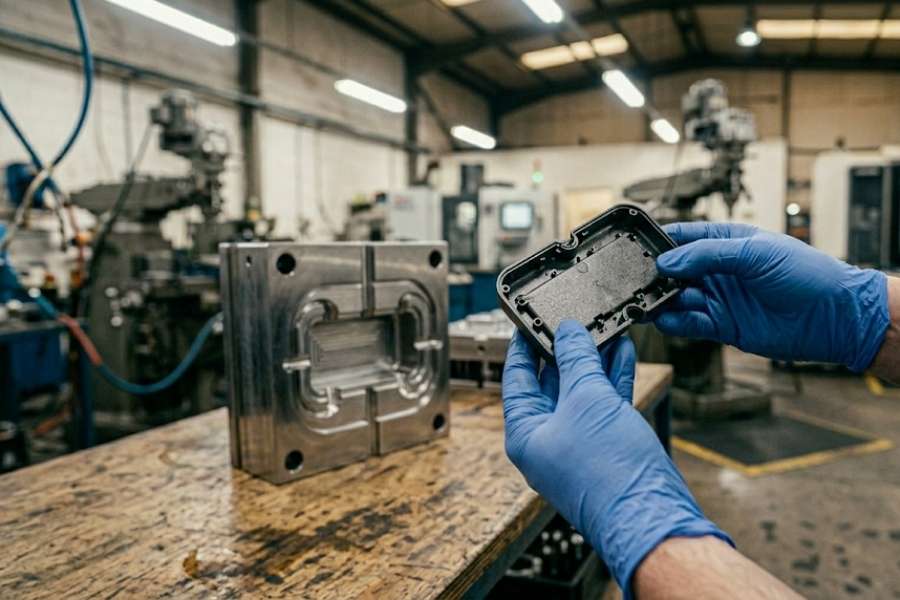
These are real tooling ranges from programs run out of our Bình Chánh, Ho Chi Minh City facility. Not industry averages from catalog sources.
| Part Complexity | Steel Grade | Prototype Mold (1-cavity) | Production Mold (1-cavity) | Tool Life (shots) |
|---|---|---|---|---|
| Simple — flat geometry, no undercuts, uniform wall ≥2mm | P20 / H13 | $2,500 – $5,000 | $6,000 – $10,000 | 300K–500K |
| Medium — 1–2 side actions, ribs, snap features, wall 1.5–2mm | P20 / H13 | $5,000 – $10,000 | $12,000 – $22,000 | 500K–800K |
| Complex — lifters, thin walls <1.5mm, tight tolerances, hot runner | H13 / S136 | $10,000 – $18,000 | $22,000 – $45,000+ | 800K–1M+ |
| Multi-cavity (×2 to ×8) — add 40–80% on single-cavity base | Cost per part drops 35–55% at ×4 cavities vs ×1 at same volume | |||
DFM review is included with every tooling quote at VNcontX — no charge. If your part geometry creates a tooling risk (sink marks, weld lines, gating conflicts), we identify it during review, not after T1. For teams still in design iteration, our prototype injection molding program uses P20 soft tooling with 15–25-day T1 delivery and the same FAI documentation as production runs.
Per-Part Injection Molding Cost for Australia: Vietnam vs China vs Local Molders
Per-part price is where Vietnam’s cost position is most visible to a buyer running a full landed cost model. The table below uses a representative 50g ABS housing (medium complexity, 1-cavity, 30-second cycle) as the benchmark part. All figures are USD, ex-works.
| Order Volume | Vietnam (VNcontX) | China (South) | Australia (Local) | Vietnam Saving vs China |
|---|---|---|---|---|
| 500 pcs | $1.60 – $2.20 | $1.40 – $2.00 | $4.50 – $7.00 | ~Parity (China slightly lower) |
| 5,000 pcs | $0.55 – $0.80 | $0.50 – $0.75 | $2.80 – $4.50 | ~Parity ex-works |
| 50,000 pcs | $0.28 – $0.40 | $0.30 – $0.45 | $1.80 – $3.00 | Vietnam 5–15% lower ex-works |
| 200,000+ pcs | $0.18 – $0.28 | $0.22 – $0.35 | $1.20 – $2.00 | Vietnam 15–25% lower ex-works |
Note: per-part figures are estimates for the benchmark part described above. Your actual quote depends on material, geometry, shot weight, and annual volume. Submit your STEP file for an exact number.
At low volumes (under 5,000 pcs), per-part prices between Vietnam and China are close. The landed cost divergence comes from duty: China-origin parts entering Australia carry 5–10% import duty on top of the ex-works price plus freight. Vietnamese-origin parts at the same volume pay 0% under AANZFTA. On a $0.70 part at 5,000 units, that is a $175–$350 duty difference per order — not critical in isolation, but material across an annual program.
At 200,000 units per year, the combined effect of lower ex-works price, 0% duty, and comparable freight transit makes Vietnam’s total landed cost 30–40% below equivalent Chinese supply. That is not a marketing figure — it is what drives Australia-based OEMs to shift mold programs out of Guangdong and into HCMC.
Injection Molding Cost Matrix — Material × Complexity × Volume (Vietnam)
Per-part price estimates (USD, ex-works) for Vietnamese production. Benchmark: single-cavity mold, standard cycle, 1.5–3mm wall, no secondary operations. Use this matrix to build your cost model before submitting for a formal quote.
| Material | Complexity | 1,000 pcs | 10,000 pcs | 50,000 pcs | 200,000+ pcs |
|---|---|---|---|---|---|
| ABS ~$1.80/kg |
Simple | $0.90 – $1.40 | $0.35 – $0.55 | $0.18 – $0.28 | $0.10 – $0.16 |
| Medium | $1.40 – $2.20 | $0.55 – $0.85 | $0.28 – $0.42 | $0.16 – $0.24 | |
| Complex | $2.20 – $3.80 | $0.85 – $1.50 | $0.42 – $0.72 | $0.24 – $0.40 | |
| PC ~$3.20/kg |
Simple | $1.20 – $1.80 | $0.48 – $0.72 | $0.24 – $0.38 | $0.14 – $0.22 |
| Medium | $1.80 – $2.80 | $0.72 – $1.10 | $0.36 – $0.56 | $0.20 – $0.32 | |
| Complex | $2.80 – $4.50 | $1.10 – $1.80 | $0.55 – $0.88 | $0.30 – $0.50 | |
| PA66 ~$4.50/kg |
Simple | $1.50 – $2.20 | $0.60 – $0.90 | $0.30 – $0.46 | $0.17 – $0.26 |
| Medium | $2.20 – $3.40 | $0.88 – $1.35 | $0.44 – $0.68 | $0.24 – $0.38 | |
| Complex | $3.40 – $5.50 | $1.35 – $2.20 | $0.68 – $1.10 | $0.36 – $0.58 |
How to use this matrix: Find your material row, your complexity tier, and your annual volume column. The range covers cycle time variation (shot weight ±30%), runner system (cold vs hot runner), and secondary finishing (none vs bead blast). Multi-cavity molds reduce per-part cost by 35–55% at ×4 cavities — if your annual volume exceeds 100,000 units, request a multi-cavity quote. Tooling cost is not included in these figures; see the tooling table above. All per-part prices are ex-works HCMC. Australian buyers: add ~$0.03–$0.06/part for sea freight to Sydney/Melbourne at typical order volumes.
Full Landed Cost Model: Shipping from Vietnam to Sydney and Melbourne

A landed cost model for an Australian buyer importing injection molded parts from VNcontX at 100,000 units per year (benchmark part: 50g ABS housing):
| Cost Component | Vietnam (VNcontX) | China (Guangdong) | Notes |
|---|---|---|---|
| Ex-works per part | $0.32 | $0.38 | Vietnam lower due to labour + overhead |
| Sea freight (per part, at 100K units) | $0.04 | $0.04 | HCMC→Sydney 10–14 days; comparable rate |
| Import duty (AU rate) | $0.00 (0% AANZFTA) | $0.02–$0.04 (5–10%) | Vietnam FTA advantage is permanent under current treaty |
| Customs clearance + handling | $0.01 | $0.01 | Comparable, per-unit amortised at volume |
| Total landed cost per part | ~$0.37 | ~$0.47 – $0.51 | Vietnam 27–38% lower landed |
For the full methodology on how Vietnam’s tariff and logistics position compares to China across manufacturing types, see our detailed post on mould cost Vietnam vs China. The CNC equivalent analysis is in our injection mold Vietnam for US companies page, which covers Section 301 tariff mechanics for US-bound shipments.
Five Variables That Move Your Injection Molding Cost the Most

Australian buyers sourcing injection molded parts from Vietnam for the first time often receive quotes that vary 40–60% between suppliers for the same drawing. The difference is rarely fraud — it is these five engineering variables being priced differently. Understanding them lets you submit a cleaner RFQ and compare quotes on equal footing.
1. Wall Thickness Uniformity
Non-uniform wall thickness forces slower injection speeds to avoid sink marks and warpage. Slower cycle = higher per-part cost. The DFM rule: keep wall variation within ±25% of nominal across the part. On a 2mm nominal wall, nothing thinner than 1.5mm or thicker than 2.5mm without a transition zone. Parts that violate this rule cost 15–30% more per cycle or require corrective tooling changes post-T1. At VNcontX, approximately 23% of first-submission drawings from Australian buyers flag wall inconsistency during DFM review — catching this before steel is cut is the difference between a $0 correction and a $3,000–$8,000 tooling modification after T1.
2. Undercut Count and Type
Each undercut that cannot be cleared by straight pull adds a side action (lifter or slider) to the mold. Side actions increase tooling cost by $1,500–$4,000 each and add mechanical complexity that reduces tool life. If your design has three undercuts and two of them are cosmetically optional, removing them before DFM sign-off saves tooling cost and reduces the risk of flash and parting line defects in production. For Australian product teams doing design work locally before sending to Vietnam for manufacturing, this is the single highest-leverage DFM change available before RFQ submission.
3. Material Selection vs Part Function
Specifying PEEK or glass-filled PA66 for an application that ABS handles adequately is a common engineering conservatism that adds real cost. VNcontX processes ABS, PP, PC, PA66, POM, and TPU — material cost per kg ranges from ~$1.80 (ABS) to ~$85–$120 (PEEK). On a 30g part at 100,000 units per year, the difference between ABS and unfilled PA66 is approximately $6,000 in annual material cost alone. If your DFM review surfaces an alternative material that meets your mechanical requirements, take it seriously. All material used at VNcontX ships with a traceable lot certificate — relevant for Australian importers who require incoming QA documentation.
4. Surface Finish Specification
A SPI-A1 mirror polish finish requires additional cavity EDM work and bench polishing — it adds $800–$3,000 to tooling cost depending on cavity surface area. If your part is internal, structural, or painted downstream, SPI-B2 or SPI-C1 is adequate and cheaper. Reserve high-polish specs for optical, medical, and consumer-facing surfaces. When submitting drawings from Australia, include your finish requirement explicitly — do not leave it unspecified. An unspecified finish gets quoted at SPI-B2 by default at VNcontX; if your product requires A1 and you receive a B2 quote, the pricing gap at T1 review creates delays.
5. Annual Volume Forecast Accuracy
Quoting at 50,000 units to get a per-part price, then ordering at 5,000, creates a real problem: the mold was not optimised for low-volume cycle economics, and the per-part price you were quoted assumed volume amortisation that did not materialise. Communicate your realistic 12-month forecast and your expected peak order size. A supplier who quotes honestly for your actual volume is worth more than one who shows you an attractive number that only applies above a threshold you will never hit. For Australian programs where volume is genuinely uncertain, our low volume injection molding guide covers the tooling decision framework for sub-10,000 unit programs.
Injection Molding Cost — Questions Australian Buyers Ask
Get an Injection Molding Cost Breakdown for Your Part
Upload your STEP file and drawing. We return tooling cost, per-part price at your target volume, and a full landed cost estimate to your Australian port — within 24 hours.
Request a Technical Quote → Talk to an Engineer →duc.nguyen@vncontx.com |
Related: Injection Molding Vietnam — Full Capability Overview · Prototype Injection Molding Vietnam — P20 Soft Tooling, 15–25-Day T1 · Mold Making Cost: Vietnam vs China — Detailed Comparison · Low Volume Injection Molding Guide — When to Use Soft Tooling · Injection Mold Vietnam for US Companies — Section 301 Tariff Analysis · How to Qualify a Vietnam Injection Moulding Supplier — Australian Buyers Guide
