Automotive Injection Molding Vietnam
Precision Plastic Parts for Tier 1 & OEM Supply Chains
Automotive plastic parts demand a different standard than general industrial molding. Wall uniformity, dimensional repeatability across a full production run, heat resistance on under-hood components, chemical resistance to brake fluid and coolant — none of this tolerates a supplier who treats automotive like a standard commercial job.
VNcontX produces automotive injection molding components at ±0.005mm standard tolerance from a facility in Bình Chánh District, Ho Chi Minh City — 25km from Cát Lái Port. Every order ships with 100% FAI, CMM dimensional report, and full material traceability. T1 mold delivery: 15–25 working days.
For US and EU automotive sourcing teams, Vietnam’s 0% Section 301 tariff exposure is a significant landed-cost factor compared to China-sourced plastic components currently facing 25–145% additional duties.
Why Automotive Teams Are Moving Plastic Parts Out of China
Section 301 tariff rounds since 2018 have progressively raised the cost of China-sourced plastic automotive components. The 2025 escalation pushed many part categories to 25–145% additional duty on landed value. For a Tier 1 supplier running high-volume injection molded housings or connectors, that cost does not absorb — it flows directly into program margins or forces re-sourcing.
Vietnam’s manufacturing labor cost sits 30–40% below comparable Chinese facilities on a landed-cost basis when tariffs are included. For sourcing teams evaluating automotive plastic parts supply alternatives, the combined tariff delta plus labor differential makes Vietnam the clearest near-term option with no origin risk. VNcontX ships from Bình Chánh District — Cát Lái Port is under 25km, Tân Sơn Nhất Airport under 20km.
Automotive Injection Molding Capabilities
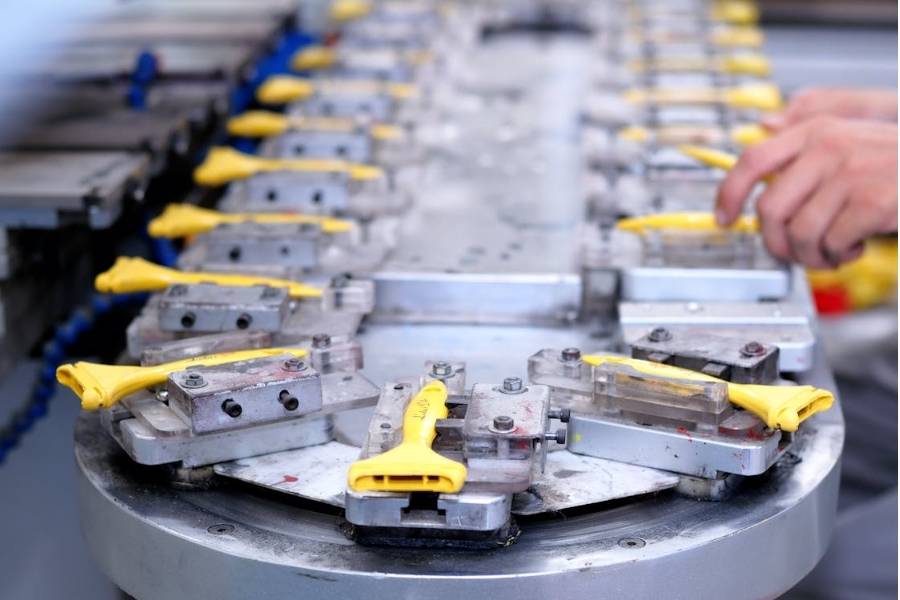
Our injection molding service covers the full range of injection molding automotive parts — from structural brackets and clip assemblies to fluid-path connectors and interior trim components. Tool construction uses H13 and P20 steel; shot weight range covers 5g to 2,000g.
Mold Specifications
- Single and multi-cavity (1–16 cavities)
- Tool steel: H13 | P20 | S136 | NAK80
- Tool life: 300,000–1,000,000 shots
- Side actions, lifters, collapsible cores
- Hot runner systems supported
- Insert molding (metal-to-plastic)
- Overmolding for multi-material assemblies
- Shot weight: 5g – 2,000g
Quality & Inspection
- 100% FAI with CMM report on every order
- Zeiss Contura + Mitutoyo CMM equipment
- Cpk ≥ 1.67 on critical dimensions
- In-process statistical process control
- Full material traceability (cert per lot)
- ISO 9001:2015 certified facility
- 98.4% on-time delivery
- DFM review included before tool cut
Resins for Automotive Plastic Parts
Material selection for automotive components involves more than mechanical properties — heat distortion temperature, chemical compatibility with underhood fluids, UV stability for exterior components, and flame classification for interior trim all factor into specification. The table below covers our standard automotive resin inventory.
Material certificates are provided for every production run. If your program specifies a UL rating, flame class, or automotive material standard (e.g., VDA 232-201), confirm during DFM review and we will source the compliant grade with supplier documentation.
From Drawing to T1 Sample — What the Process Looks Like
Most automotive sourcing teams have been burned by the same sequence: supplier accepts the job, cuts the tool without a real DFM review, T1 samples come back with sink marks, short shots, or weld lines on a cosmetic surface, and you’re four weeks in before anyone flags the wall thickness problem that was visible in the CAD file.
The VNcontX process runs a mandatory DFM review before any steel is cut. For automotive plastic injection molding orders, this covers gate location, wall thickness uniformity, draft angles on all pull directions, parting line placement, and ejector pin positioning relative to cosmetic surfaces. You receive a written DFM report before approving tooling. If there’s a design issue that will generate a defect, we surface it at this stage — not after T1.
Automotive Plastic Component Types We Produce
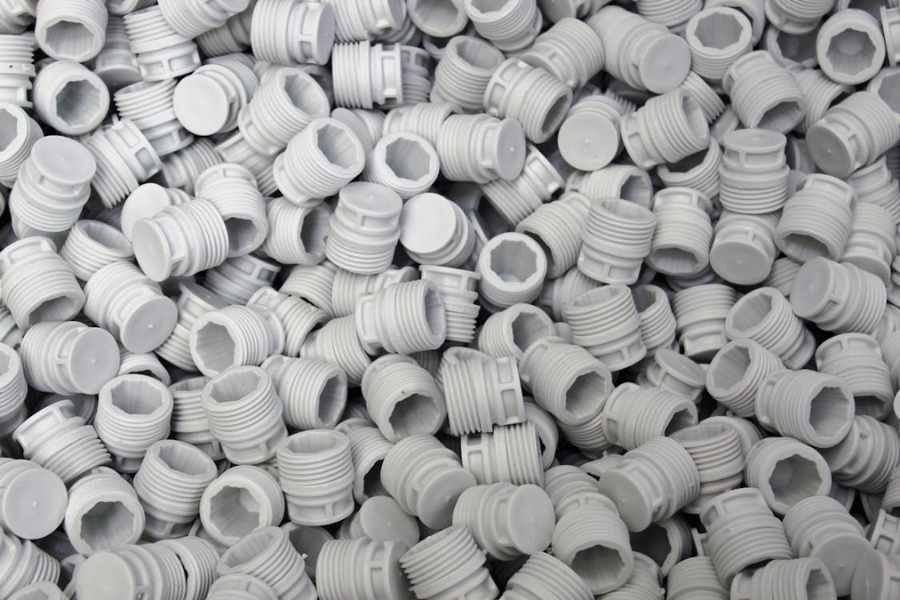
VNcontX handles both structural and aesthetic automotive plastic injection molding across under-hood and interior programs. The component list below reflects active program types — not a marketing checklist. If your part category is not listed, send the drawing for a technical review.
Under-Hood & Structural
- Connector bodies and housings (PA66, POM)
- Battery bracket and retention components
- Fluid reservoir caps and baffles
- Clip and fastener assemblies
- Sensor brackets and mounting plates
- Cooling system plastic components
Interior & Trim
- HVAC duct and register housings
- Instrument cluster bezels and surrounds
- Door panel sub-assemblies
- Center console inserts
- Glove box latches and hinges
- Light diffuser panels (PC)
For assemblies requiring both injected plastic and machined metal components in the same build, VNcontX operates CNC machining (3–5 axis, DMG Mori) alongside the molding facility — single-source coordination without subcontract gaps. See our custom injection molding Vietnam page for full capability scope.
Automotive Injection Molding — Common Questions from Sourcing & Engineering Teams
These are the actual questions procurement and engineering teams raise when evaluating a Vietnam-based injection molding supplier for automotive programs.
Related Pages
- Injection Molding Vietnam — full capability overview
- Injection Mold Vietnam for US Companies — sourcing guide
- Custom Injection Molding Vietnam — complex geometries and multi-cavity
- Overmolding & Insert Molding Vietnam — multi-material assemblies
- Rapid Tooling & Die Making Vietnam — steel prototype molds
Send Your Automotive Plastic Part Drawing
DFM review, tooling quote, and T1 lead time — confirmed within 48 hours of receiving your drawing package. No deviation. No exception.
